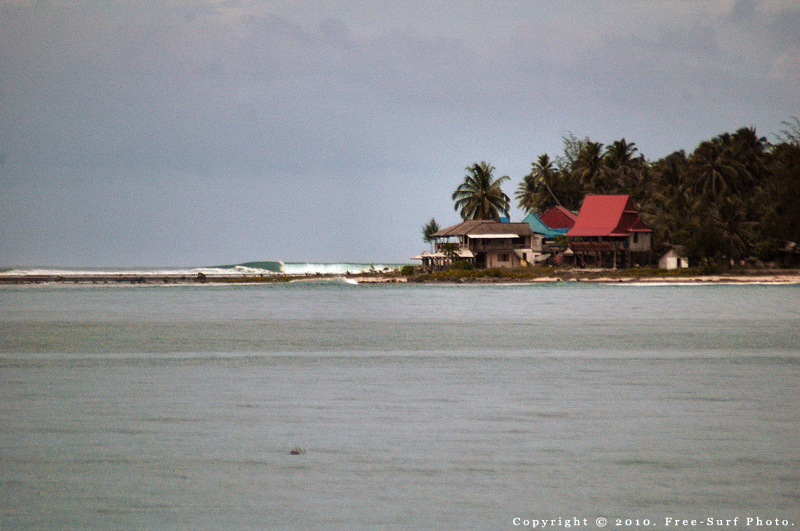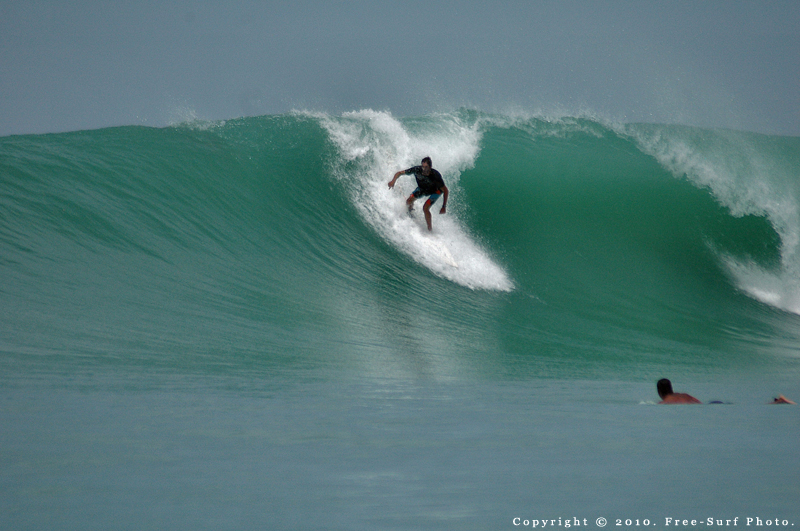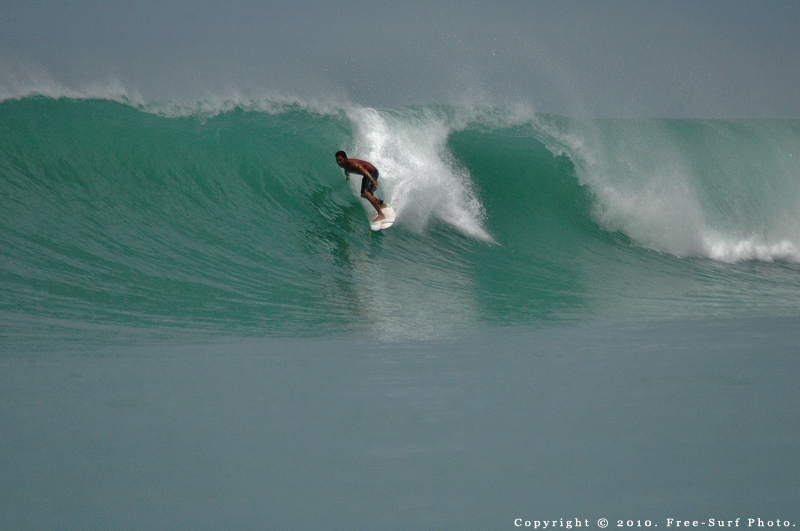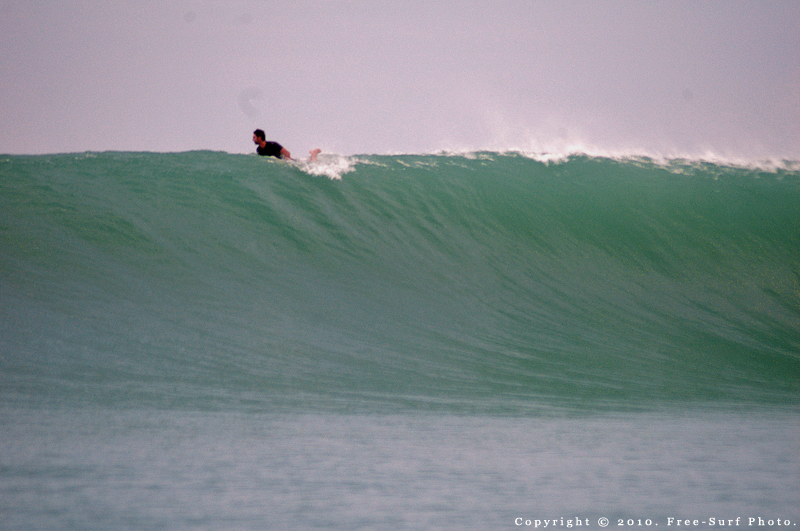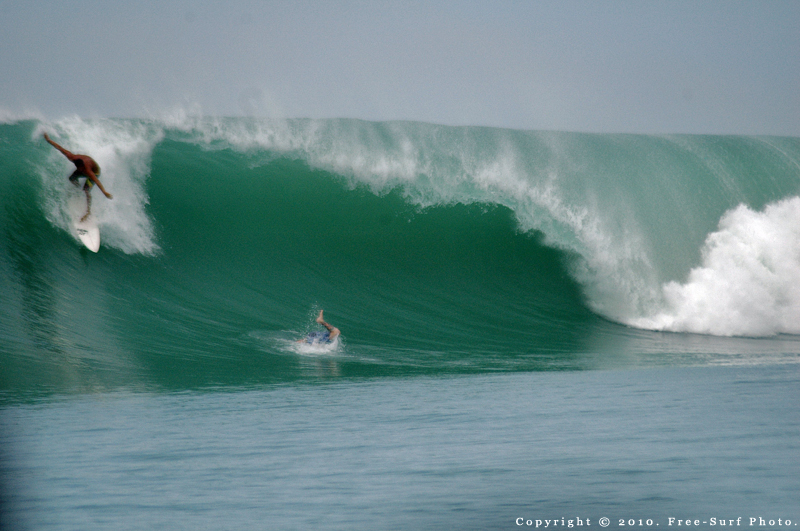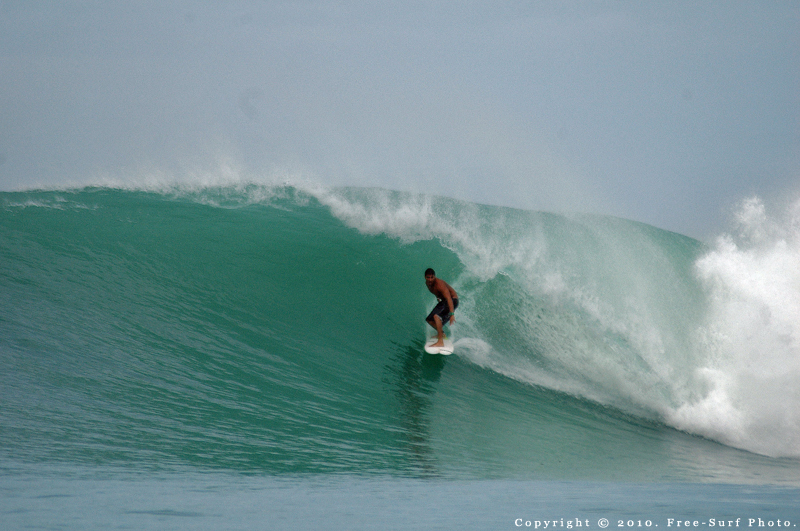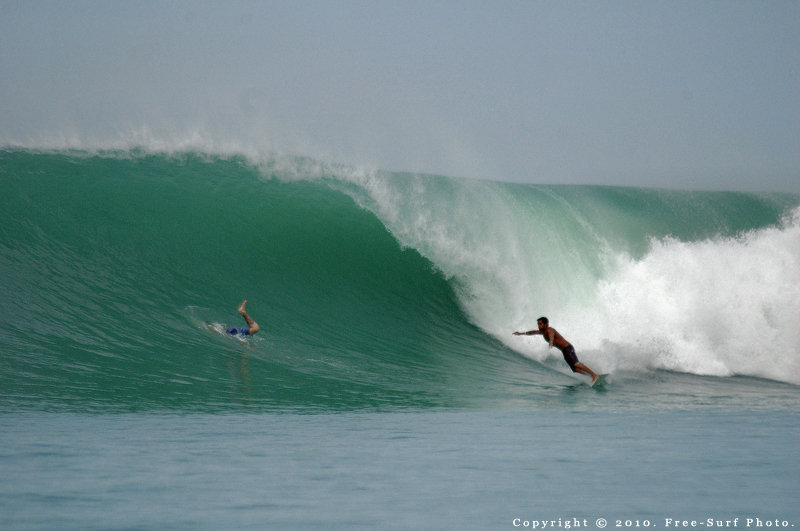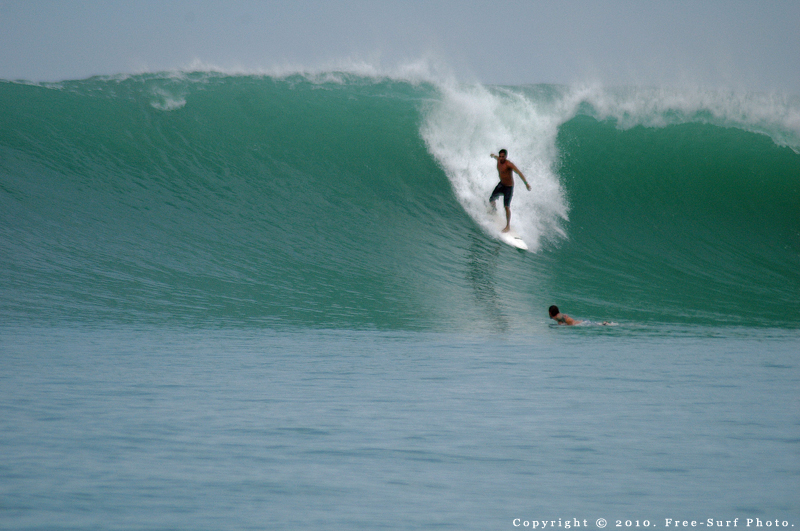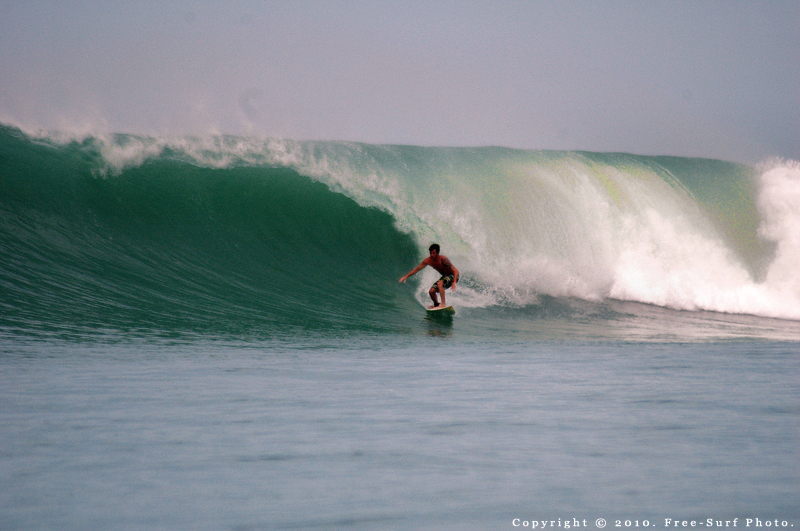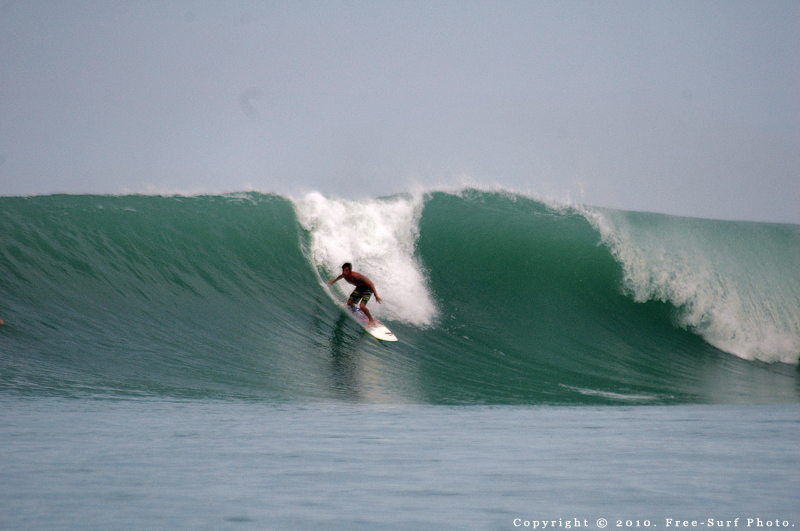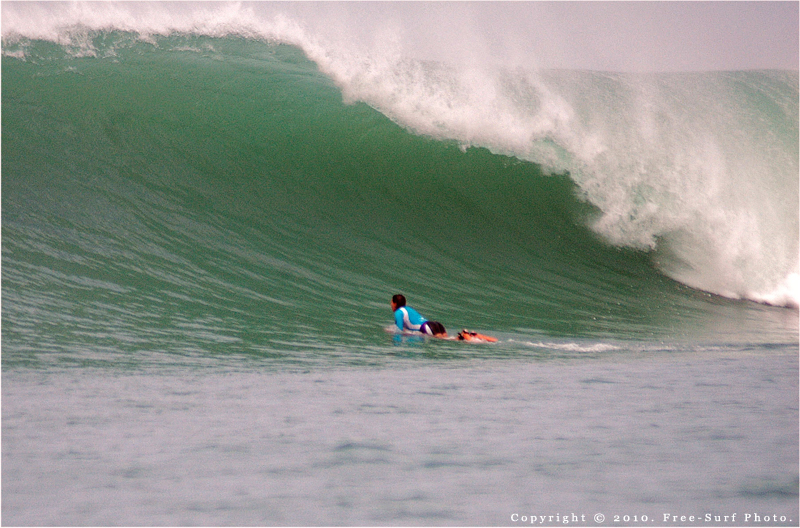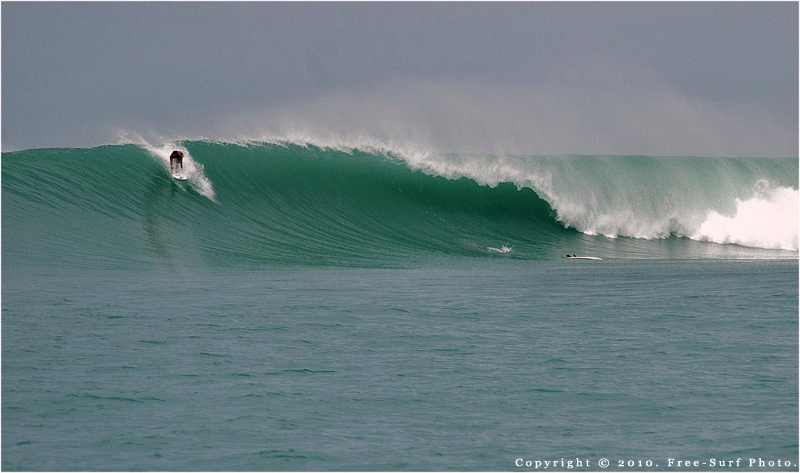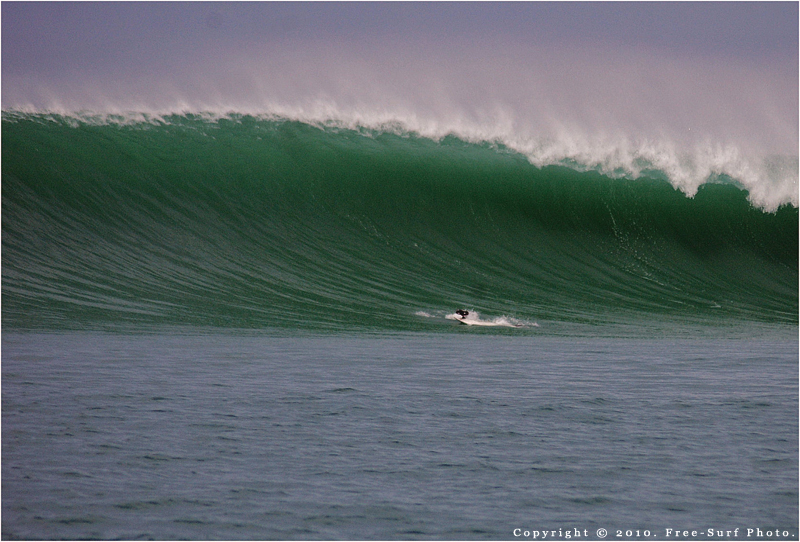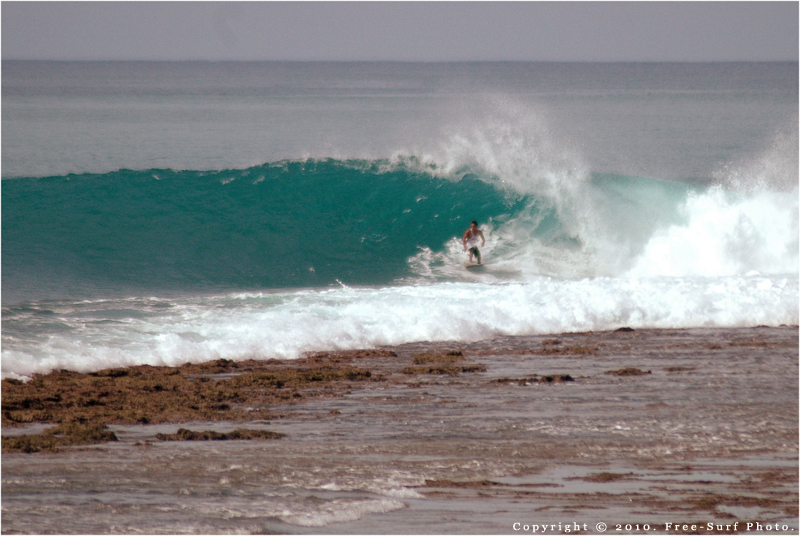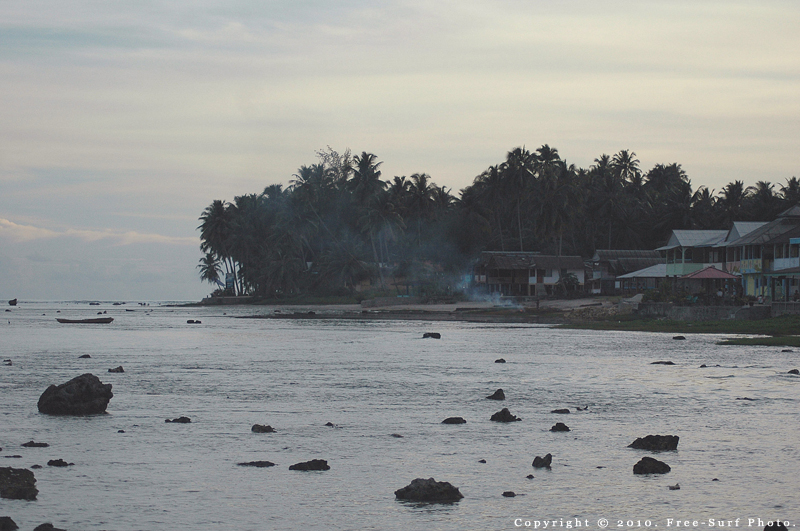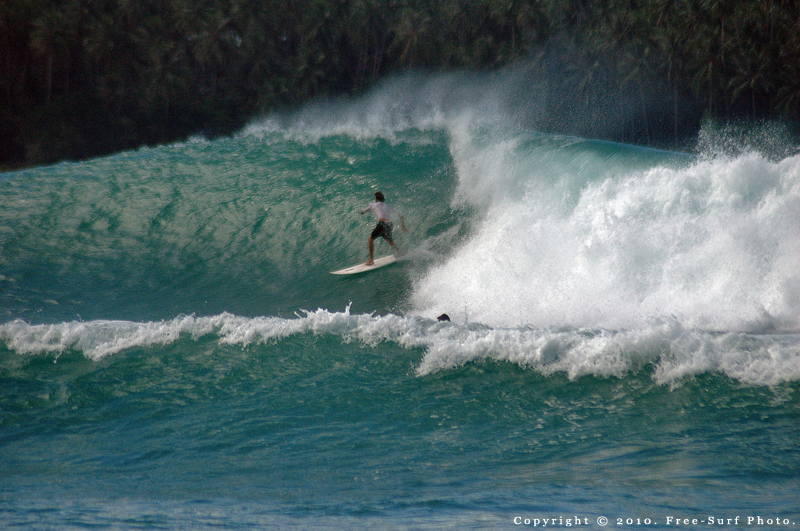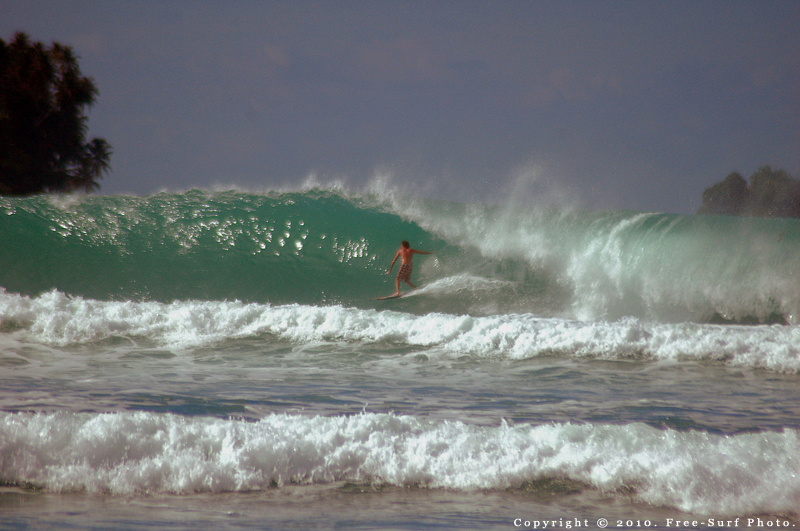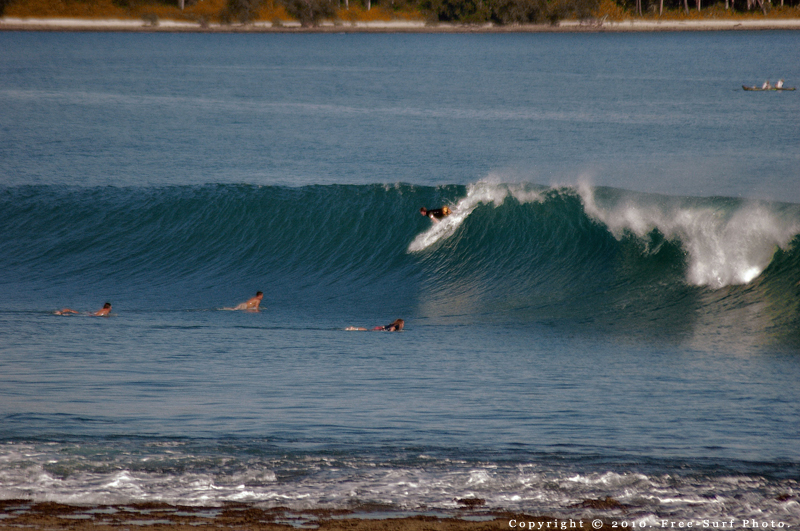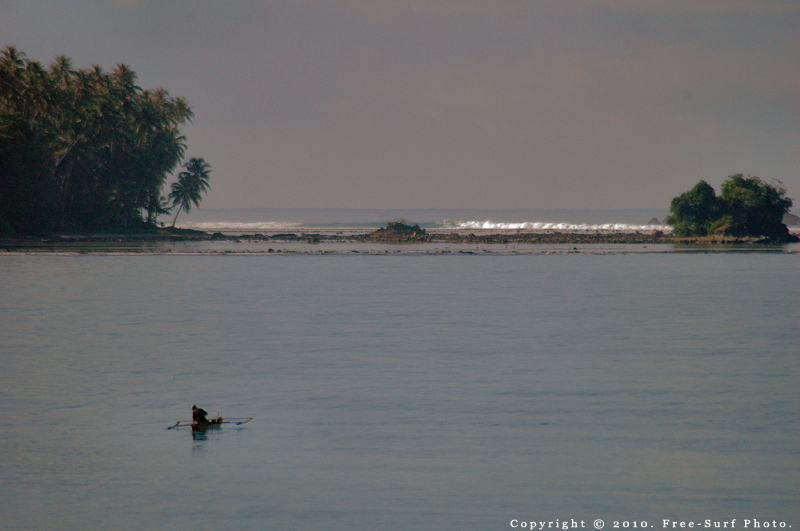
The chief of the village was drunk when he took me to the tomb of the Queen of Nias Island. High on a hill above the coconut palms was the fantastic monument with finely carved dragons writhing around its pillars. It was from the balcony of the Queen’s tomb that I first saw the wave wrapping into a small bay. I asked the chief about it, but he quickly changed the subject. He just wanted me to play a song. “Rock Star!” he slurred.
“What should I play?” I said.
“Elvis” said the chief.
I really didn’t know any Elvis songs. In fact, I still don’t know a complete song from start to finish from anyone, just riffs and pieces from lots of songs, but definitely no Elvis…so we settled on Led Zeppelin. This seemed to make him happy, and when we returned to the subject of the wave, he explained that because he was the chief, that he got to name the wave, and it was called, “ROCK STAR!”
I’ve always hated that name for the wave, and adamantly refuse to call it that, so I call it by the name of the village, which is Hilifalawo, or sometimes Durian Point, because I like that better. Durian, which is the king of all fruit, when it ripens, emits an odor so pungent, that it attracts the ghosts of blues singers from the exact opposite side of the globe – deep in the American South. By the time the odor reaches that side of the globe, the smell is just faint enough to be sweet; some people even describe it as sexual. The lonely ghosts of blues musicians Robert Johnson, Bukka White, Blind Willie McTell, Lightning Hopkins, and Lead Belly have all made the ghost pilgrimage to the tiny village called Hilifalawo, home of a wave shrouded in mystery and tragedy – obscure and mythical as the ghosts that wander through the village, drawn to the smell of their last sexual encounters on earth.
https://www.stormrider.surf/library/article/durian-point
― Phil Goodrich (picture below)